Granite vs Italian Marble: Which Needs More Polishing Maintenance?
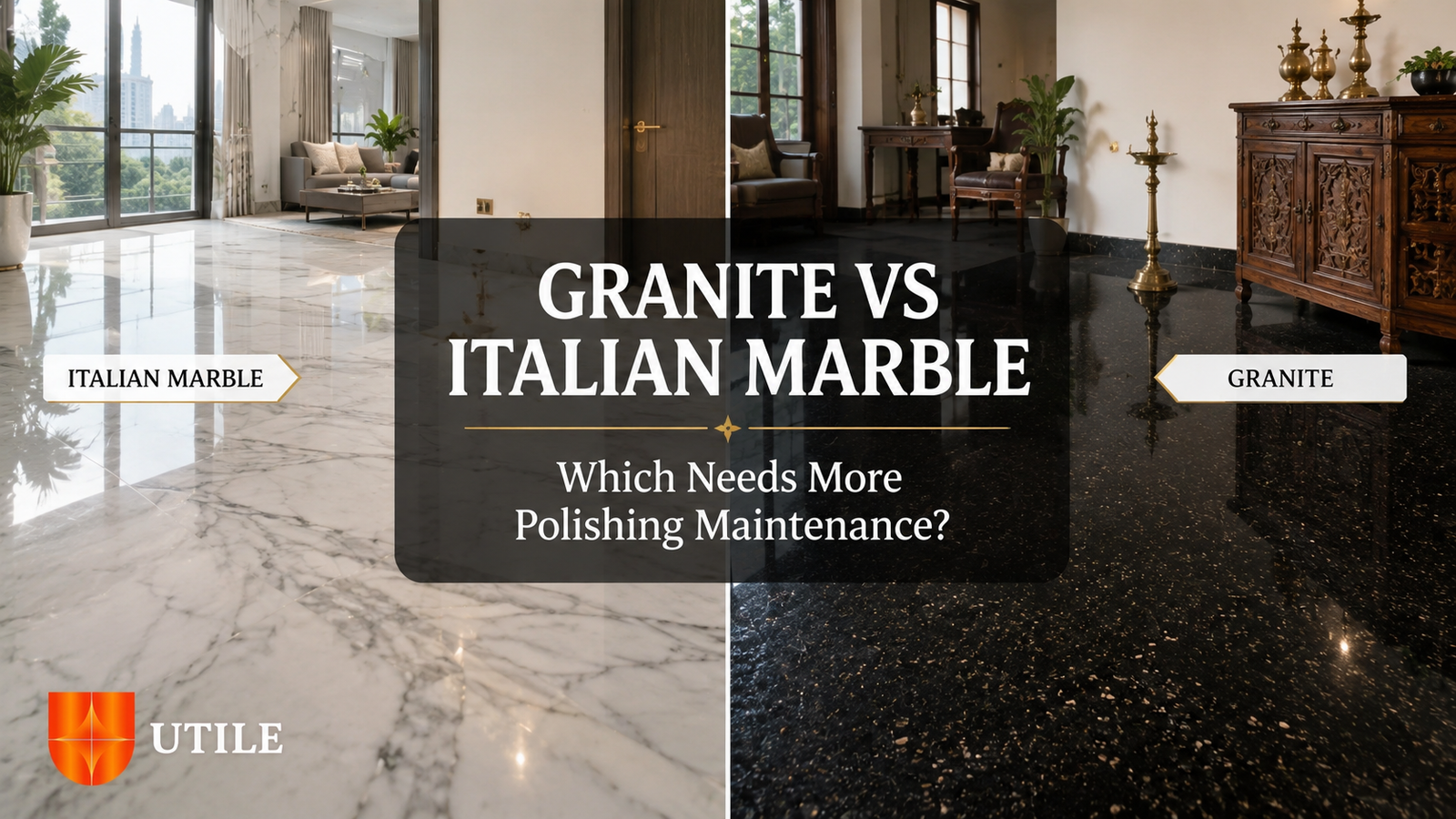
You’re standing in a Bangalore showroom, looking at two stunning floor samples. One is Italian marble: soft, luminous, with elegant veining that makes your heart skip. The other is granite: bold, crystalline, practically radiating strength. Both look incredible. But here’s the question nobody in that showroom will answer honestly: which one is going to cost you more time, effort, and money to maintain over the next five to ten years?
If you’ve already installed one and are dealing with dullness, scratches, or stains, you’re probably asking a more urgent version of that same question.
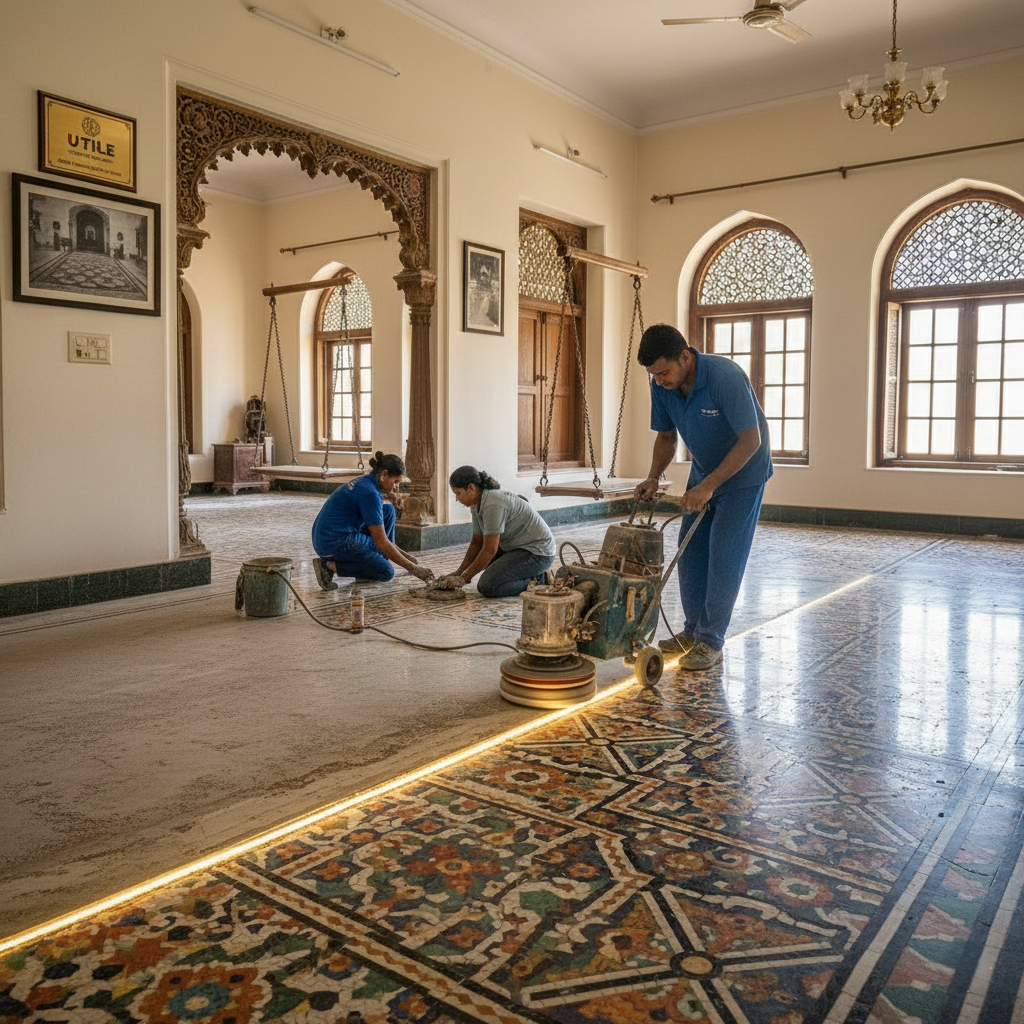
We’ve polished and restored thousands of granite and Italian marble floors across Bangalore. From penthouse apartments in Koramangala to family homes in Whitefield, we’ve seen how both stones age in real Bangalore conditions. This comparison is based on that hands-on experience, not showroom theory.
Note: Italian marble needs professional polishing every 12 to 18 months and costs ₹20 to ₹45 per sq ft. Granite needs polishing only every 2 to 3 years at ₹12 to ₹25 per sq ft. Granite is significantly easier and cheaper to maintain long-term.
Understanding the Two Stones
Before we compare maintenance, it helps to understand why these two stones behave so differently. It comes down to how they were formed.
Italian marble (Carrara, Calacatta, Statuario) is a metamorphic rock made primarily of calcite. It’s famous for its luminous, translucent quality and beautiful veining. But calcite is chemically reactive to acids and relatively soft, scoring just 3 to 4 on the Mohs hardness scale. That softness is what gives marble its warm, smooth feel underfoot, and also what makes it vulnerable to scratches, etching, and stains.
Granite is an igneous rock formed from cooled magma, composed mainly of quartz and feldspar. It scores 6 to 7 on the Mohs scale, nearly twice as hard as marble. It comes in a massive range of colours and patterns, and its dense, crystalline structure gives it a distinctive sparkle when polished. That hardness also makes it far more resistant to daily wear.
| Property | Italian Marble | Granite |
|---|---|---|
| Rock Type | Metamorphic | Igneous |
| Primary Composition | Calcite | Quartz and Feldspar |
| Mohs Hardness | 3 to 4 | 6 to 7 |
| Appearance | Soft, luminous, elegant veining | Bold, crystalline, wide colour range |
| Key Vulnerability | Acids, scratches, stains | Chips under heavy impact |
This fundamental difference in hardness and chemical composition is what drives every maintenance difference between the two.
Marble vs Granite Maintenance: The Honest Comparison
Let’s break this down across the factors that actually matter to Bangalore homeowners.
| Factor | Italian Marble | Granite |
|---|---|---|
| Scratch Resistance | Low (soft stone; micro-scratches from daily dust accumulate quickly) | High (very hard; daily wear barely affects the surface) |
| Acid and Chemical Sensitivity | High (etches from lemon, vinegar, coffee, most generic cleaners) | Low (largely acid-resistant; tolerates a wider range of products) |
| Stain Susceptibility | High (porous; liquids absorb quickly if not wiped immediately) | Low (denser structure; slower liquid absorption; sealed granite is very difficult to stain) |
| Hard Water Impact | Severe (mineral deposits bond to the surface; forms stubborn chalky film) | Moderate (deposits form more slowly and are easier to clean) |
| Daily Cleaning | Requires pH-neutral marble cleaner only | Warm water with mild detergent is sufficient |
Scratch Resistance in Detail
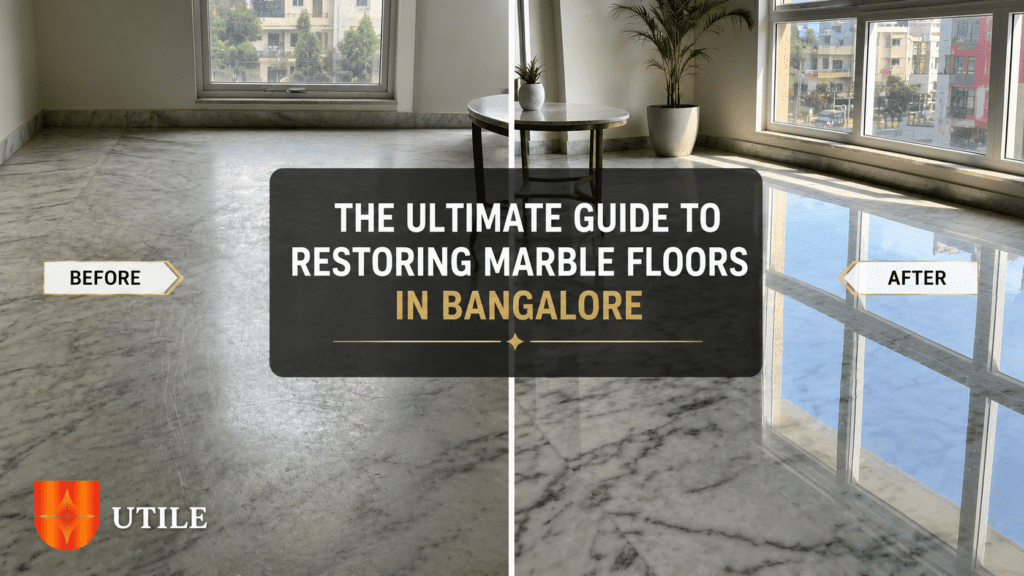
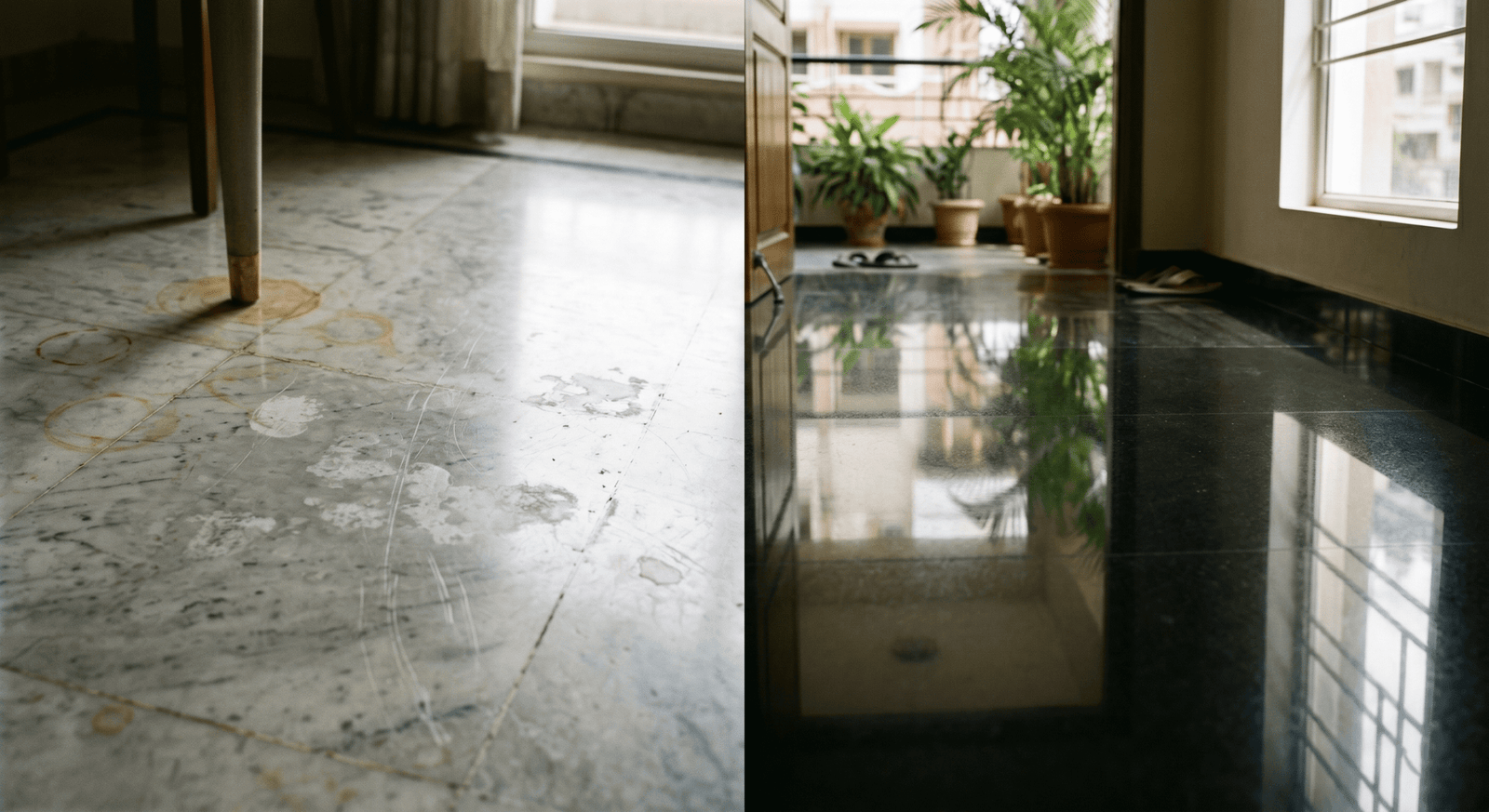
Italian marble scratches easily. Dragging a chair, dropping keys, or even walking in shoes with grit on the soles can leave visible marks. In Bangalore’s dusty conditions, micro-scratches from tracked-in grit accumulate fast: within months, a freshly polished marble floor starts looking hazy.
Granite is extremely scratch-resistant. The same daily activities that damage marble barely affect granite. For Bangalore homes with kids, pets, or heavy foot traffic, this is a major practical advantage.
Chemical and Acid Sensitivity in Detail
This is where Italian marble really struggles, especially in Indian homes. Marble reacts chemically to anything acidic: lemon, vinegar, tomato sauce, coffee, tea, and most generic floor cleaners. The acid dissolves the calcite surface, leaving dull, rough patches called etching. In a typical Bangalore kitchen, acidic spills are a daily reality.
Granite is largely acid-resistant. It won’t etch from common household spills. For homes where the kitchen opens into the living area, common in modern Bangalore apartments, this resilience is a significant benefit.
Hard Water Impact in Detail
Bangalore’s hard water, particularly in borewell-dependent areas like Sarjapur Road, Electronic City, and Yelahanka, affects both stones, but marble more severely. Hard water deposits bond to marble’s softer surface and create a stubborn, chalky film that dulls the shine. On granite, hard water buildup is easier to clean and slower to form.
Polishing Frequency: How Often Each Stone Needs Professional Care
This is the question most Bangalore homeowners really want answered.
| Stone | Recommended Polishing Frequency | Notes |
|---|---|---|
| Italian Marble | Every 12 to 18 months | Every 10 to 12 months if you have hard water, heavy foot traffic, or a busy kitchen |
| Granite | Every 2 to 3 years | Commercial or high-traffic spaces may need it every 12 to 18 months |
In practical terms: if you have Italian marble, you’ll call a floor polishing service in Bangalore roughly four to five times over a five-year period. With granite, that drops to just two times.
Between professional sessions, Italian marble requires careful daily maintenance: pH-neutral cleaners only, immediate spill cleanup, and felt pads under all furniture. Granite is far more forgiving: warm water with a mild detergent works fine for daily cleaning, and it tolerates a wider range of products.
Cost Comparison: What You'll Actually Spend in Bangalore
Let’s put real Bangalore numbers on this. All figures are based on current 2026 market rates.
Italian Marble Polishing Cost
| Treatment | Cost per Sq Ft |
|---|---|
| Standard Restoration (Honing + Polishing) | ₹20 to ₹45 |
| Full Restoration (Grinding + Polishing + Sealing) | Up to ₹55 |
| Sealing (required every 6 to 12 months) | ₹5 to ₹10 per session |
Granite Polishing Cost
| Treatment | Cost per Sq Ft |
|---|---|
| Standard Polishing | ₹12 to ₹25 |
| Full Restoration (rarely needed) | ₹20 to ₹35 |
| Sealing (required every 2 to 3 years) | Lower frequency cost |
Total 5-Year Cost for a 1,500 Sq Ft Bangalore Home
| Stone | Polishing Sessions (5 Years) | Sealing Sessions (5 Years) | Estimated Total Cost |
|---|---|---|---|
| Italian Marble | Approx. 4 to 5 sessions | Approx. 5 to 6 sessions | ₹2,00,000 to ₹3,00,000 |
| Granite | Approx. 2 sessions | Approx. 2 sessions | ₹80,000 to ₹1,50,000 |
That’s roughly a 2x cost difference over five years. For families watching their home maintenance budget, this is worth factoring into the flooring decision.
Wondering what your specific floors will cost to maintain? Get a personalised quote from Utile: send us a WhatsApp message with a photo of your floor, and we’ll give you an honest estimate within hours.
Which Is Better for Bangalore Homes?
There’s no single right answer. It depends on your priorities, lifestyle, and budget.
Choose Italian marble if visual impact is your top priority and you’re willing to invest in regular maintenance. Italian marble elevates formal living rooms, master bedrooms, and foyer areas like nothing else. Its soft warmth and dramatic veining create a sense of luxury that granite simply can’t replicate. But go in with your eyes open about the maintenance commitment and cost.
Choose granite if you want beauty with practicality. Granite is ideal for high-traffic areas, kitchens, children’s rooms, and any space where durability matters more than delicacy. It handles Bangalore’s dust, hard water, and daily chaos with minimal fuss. The colour and pattern variety available today means granite doesn’t have to look utilitarian: there are stunning options at every price point.
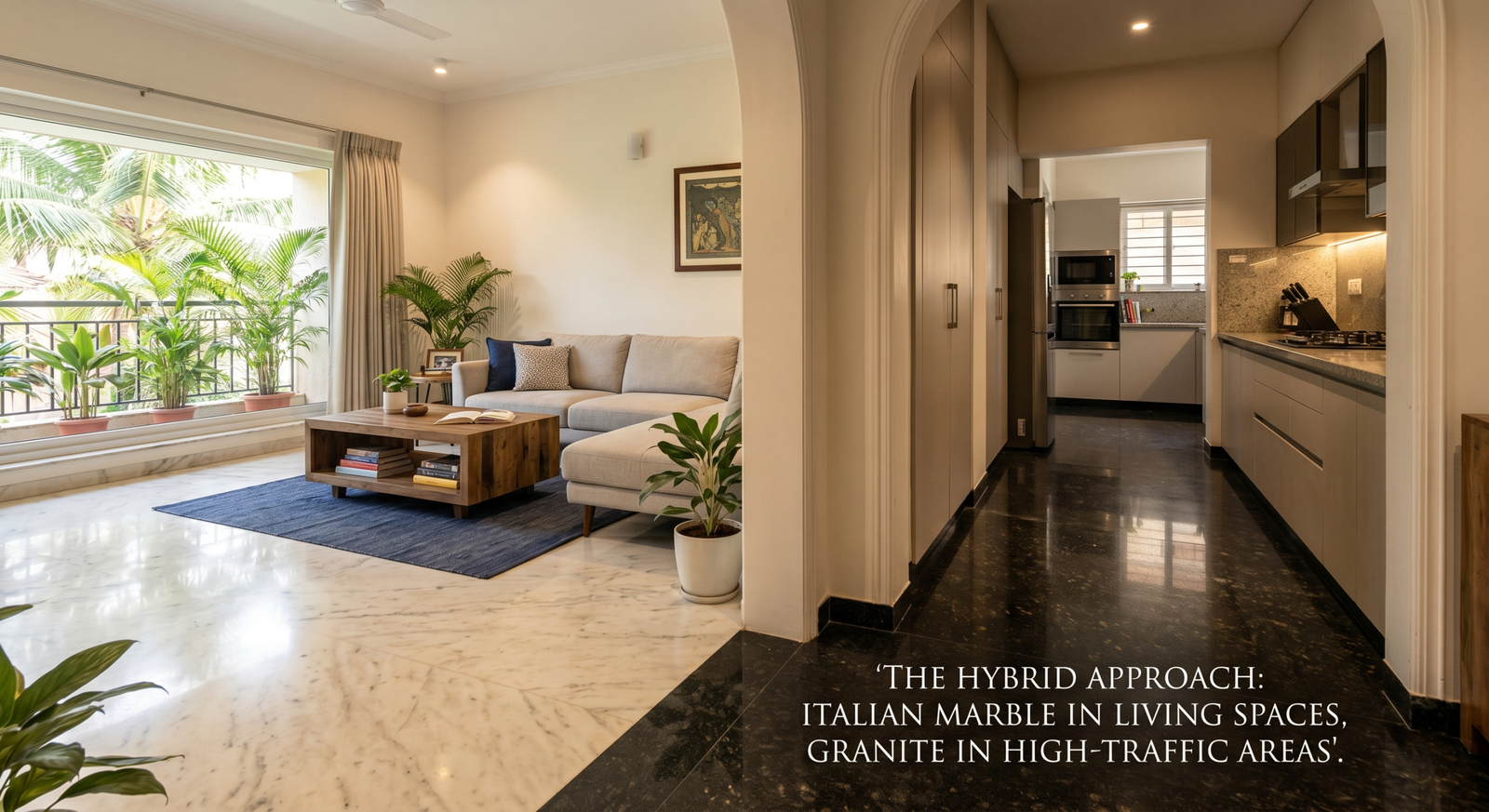
The smart Bangalore approach: go hybrid. Many homeowners we work with use Italian marble in the living room and master bedroom, the spaces where its beauty makes the biggest impact and foot traffic is more controlled. Then they use granite in the kitchen, bathrooms, hallways, and utility areas where durability and easy maintenance matter most. This gives you the best of both worlds while keeping your total maintenance cost manageable.
Practical Tips from Utile's Floor Polishing Team
Our technicians restore hundreds of marble and granite floors across Bangalore every month. Here are their best tips based on years of hands-on experience.
For Italian marble owners: Invest in a two-doormat system at every entrance: a coarse mat outside and a soft microfibre mat inside. This single change dramatically reduces the grit that causes micro-scratches. Also, never let your cleaning staff use generic floor cleaners on marble. Provide them with pH-neutral marble cleaner and make sure they know the difference.
For granite owners: Don’t ignore small chips near edges or high-impact zones. Granite is tough but not indestructible. A small chip filled with colour-matched epoxy costs almost nothing and prevents the damage from spreading into a larger crack. It’s a five-minute preventive fix.
For both: Schedule your first professional assessment within six months of installation. Many issues caught early, such as uneven sealing, lippage, or grout problems, cost a fraction to fix compared to addressing them two or three years later. Our marble polishing services in Bangalore include a complimentary first inspection for new installations.
Why Bangalore Homeowners Trust Utile for Floor Polishing
Whether you have Italian marble, granite, or a mix of both, Utile delivers the same standard of care.
Experience Across Both Stones. Our technicians are trained on Italian marble, Indian marble, and all major granite varieties. We know the specific compounds, pressures, and processes each stone requires. A Carrara marble floor and a Black Galaxy granite floor need completely different approaches, and we don’t confuse the two.
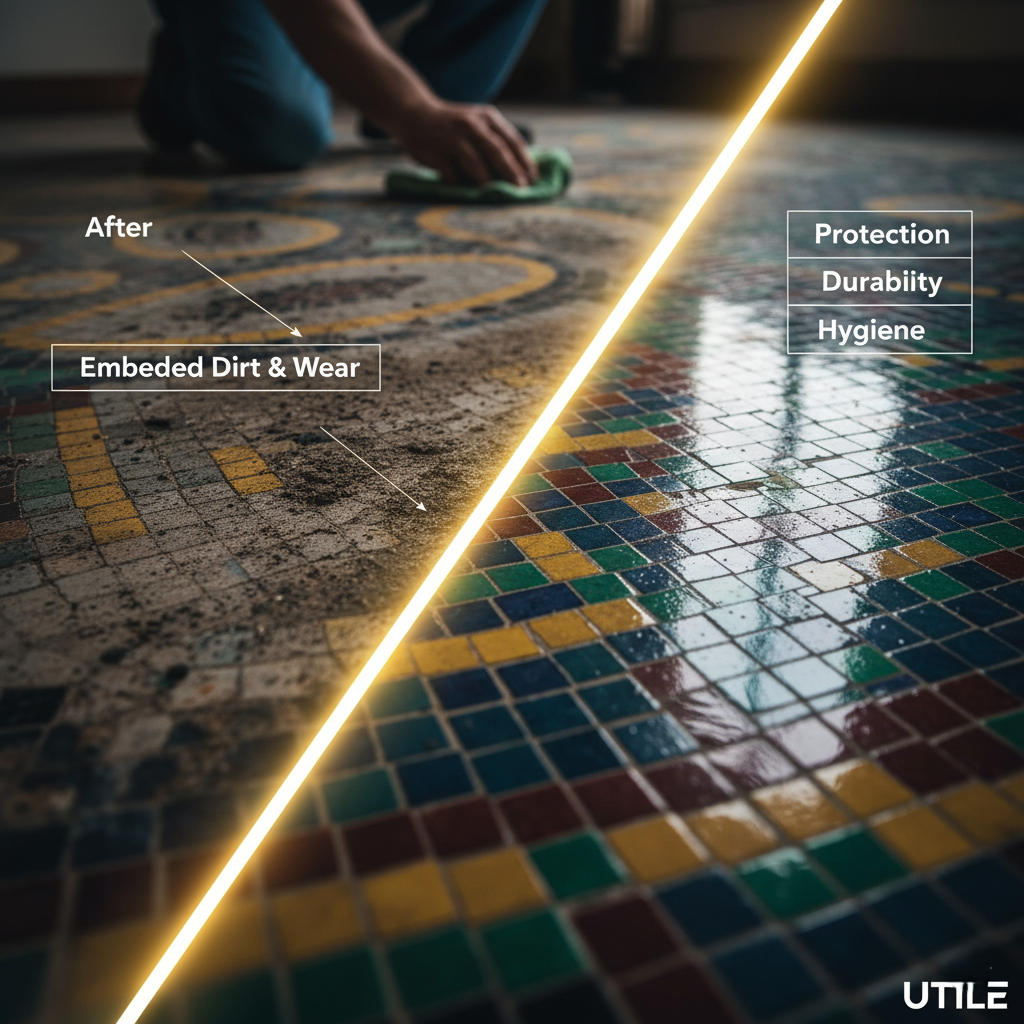
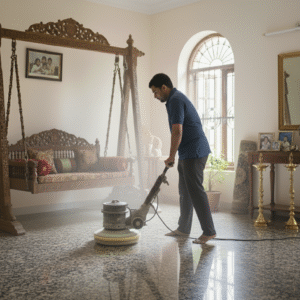
Diamond Abrasives, Not Chemical Shortcuts. We use genuine diamond grinding and polishing pads for every job. Chemical polishes give a quick, temporary shine that fades in weeks. Diamond restoration reshapes the actual stone surface, delivering results that last 12 to 18 months on marble and 2 to 3 years on granite.
Sealing Is Standard, Not Optional. Every restoration includes professional sealing. We never skip it and we never charge it as a surprise extra. Sealing is what makes restoration last, and it’s included in your quote from day one.
Transparent, Honest Pricing. You get a detailed quote before work begins. No hidden fees, no upselling mid-job. We’ve built our reputation on trust, and in a market full of inconsistent providers, that matters.
Frequently Asked Questions
Is granite easier to maintain than marble?
Yes, significantly. Granite is nearly twice as hard as marble, far less porous, and resistant to acids and scratches. It needs professional polishing only every 2 to 3 years compared to marble’s 12 to 18 months, and daily cleaning is simpler because granite tolerates a wider range of products.
How much does granite polishing cost in Bangalore?
Granite polishing in Bangalore costs ₹12 to ₹25 per sq ft for standard polishing. Full restoration, if needed, ranges from ₹20 to ₹35 per sq ft. For a 1,500 sq ft home, a typical granite polishing session costs ₹18,000 to ₹37,500.
How often should granite floors be polished?
Under normal residential use in Bangalore, granite floors need professional polishing every 2 to 3 years. Commercial or high-traffic spaces may need attention every 12 to 18 months.
Can I use the same cleaner on granite and marble?
No. Marble requires pH-neutral cleaners only: any acidic product will etch the surface. Granite is more tolerant and can handle mildly acidic or alkaline cleaners without damage. However, using a pH-neutral cleaner on both is the safest universal approach.
Does Bangalore's hard water damage granite?
Hard water affects granite less than marble, but it can still leave mineral deposits over time. If you’re in a borewell-dependent area like Sarjapur Road, Electronic City, or Yelahanka, wiping floors dry after mopping and scheduling slightly more frequent polishing helps prevent buildup.
Which flooring is better for a Bangalore kitchen?
Granite, without question. Kitchens involve constant exposure to acidic foods (lemon, tomato, vinegar), heavy foot traffic, and frequent spills. Granite handles all of this with minimal damage. Italian marble in a busy Indian kitchen will require frequent, expensive maintenance.
The Bottom Line
Italian marble wins on pure aesthetics. Granite wins on practicality, durability, and long-term cost. Neither is objectively better: the right choice depends on where you’re using it, how much maintenance you’re willing to commit to, and what your budget allows over the long term.
What both stones share is this: regular professional care dramatically extends their life and beauty. A well-maintained marble floor can last generations. A well-maintained granite floor can last practically forever.
Whether your home has marble, granite, or both, Utile’s floor polishing experts in Bangalore are here to help. Book a free floor assessment today. We’ll inspect every surface, recommend the right treatment for each stone, and give you an honest, transparent quote with no pressure.
Visit Utile.in or send us a photo of your floors on WhatsApp. Let’s keep your home looking its absolute best.