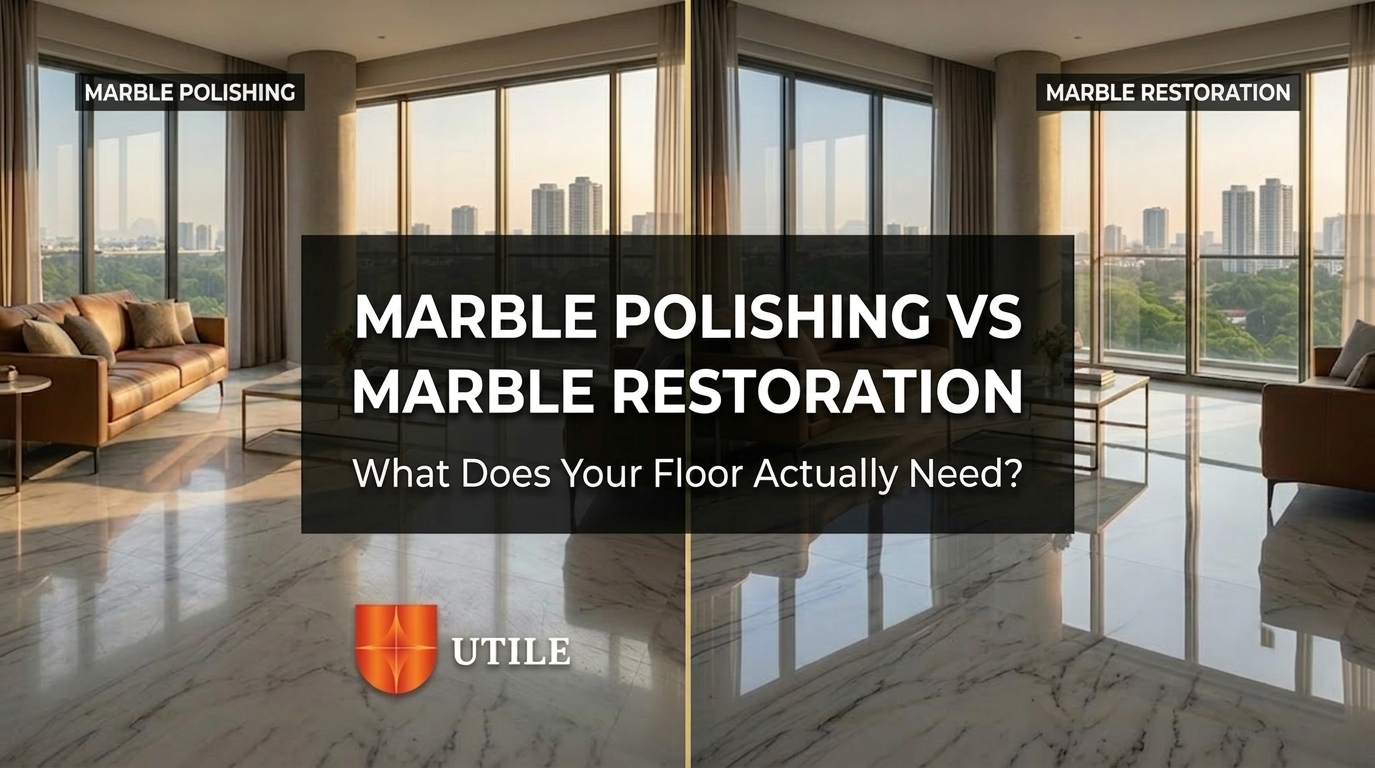
Marble Polishing vs Marble Restoration: What Does Your Floor Actually Need?
When a Bangalore homeowner calls us about dull or scratched marble, the first question is almost always the same: “Do I just need a polish, or is it something bigger?” It’s a fair question, and most people get the wrong answer, not because the information isn’t out there, but because the people they ask have a financial reason to tell them otherwise. Low-cost aggregators and generic cleaning platforms routinely book a “marble polish” on floors that clearly need full restoration, apply a quick chemical coat that looks brilliant for three weeks, and leave. Six weeks later, the floor looks exactly as it did before. The homeowner assumes that’s just how marble works.
It isn’t. The difference between basic polishing and proper marble floor restoration Bangalore is not a price tier. It is an entirely different category of treatment, addressing different kinds of damage with different tools and delivering results that last years rather than weeks. Getting this distinction wrong doesn’t just waste your money on an ineffective treatment; it lets real stone damage compound underneath, making eventual restoration more expensive and more intensive than it needed to be.
This guide breaks it down clearly so you can walk into any conversation with a service provider knowing exactly what your floor needs and exactly what questions to ask.
What is Marble Polishing? (The Maintenance Routine)
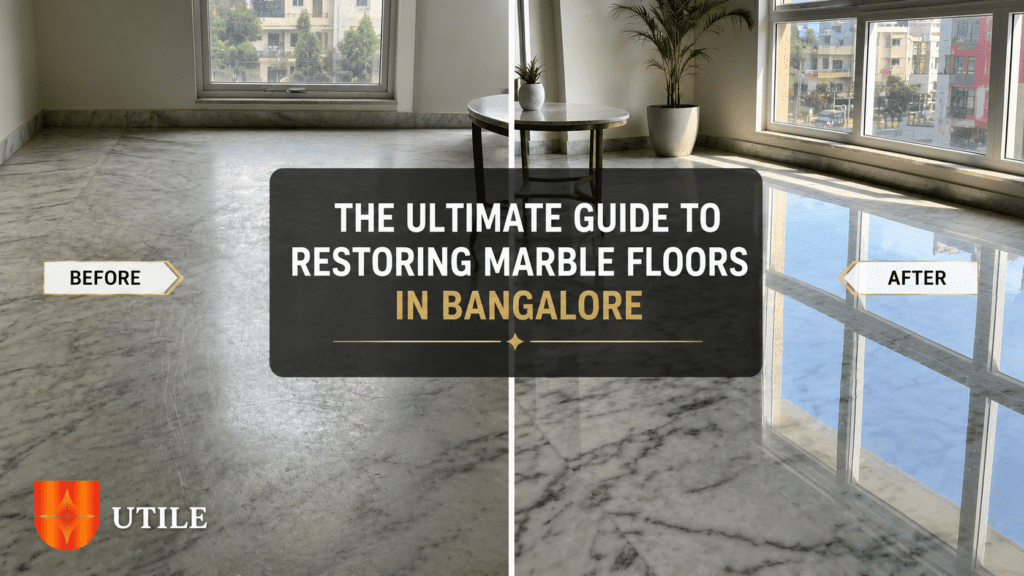
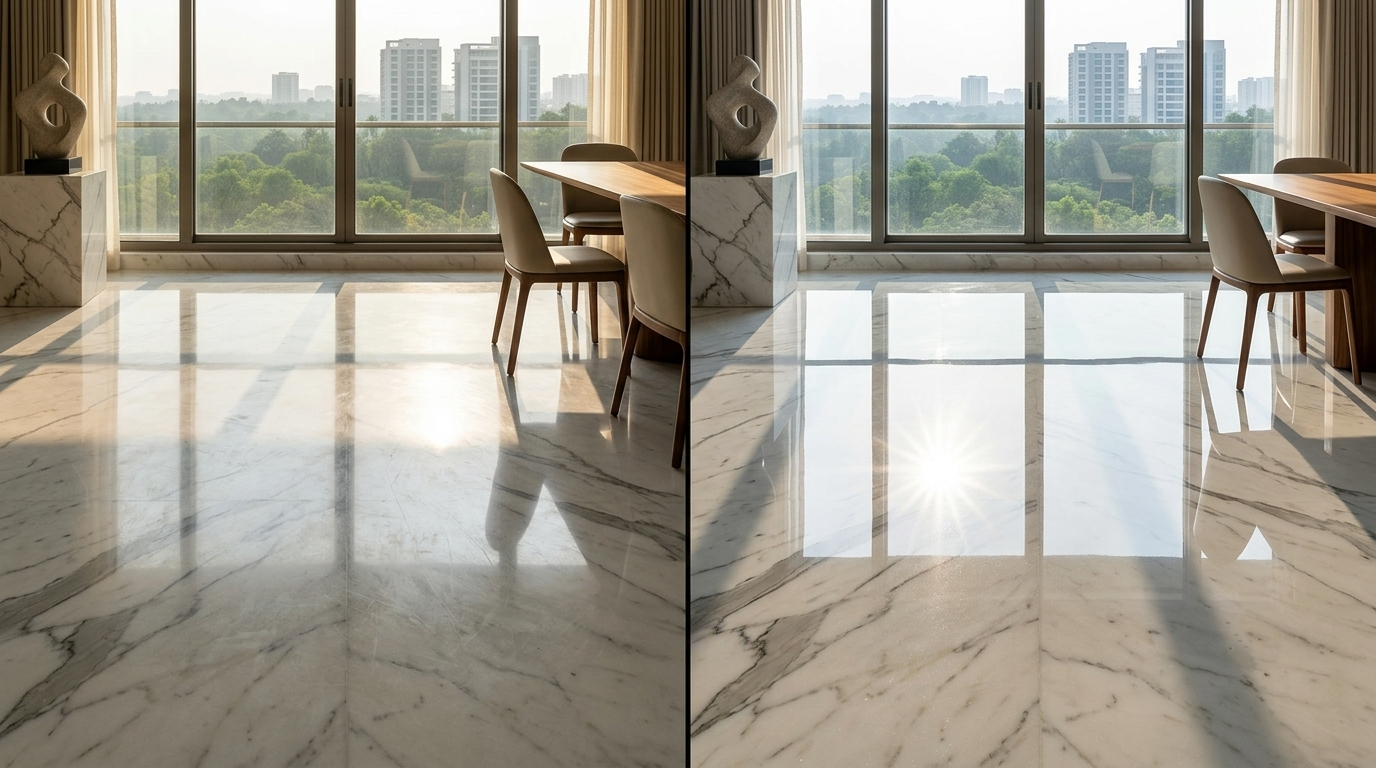
Basic marble polishing Bangalore is a surface-level treatment, not a corrective one. It works by applying chemical crystallization compounds directly to the existing stone surface, which react with the calcite in marble to produce a temporary reflective layer. When a floor is only mildly dull from light foot traffic, carries no visible scratches, and has no acid etching from wrong cleaners, a polish is perfectly appropriate as a maintenance routine. Think of it the way you would think of waxing a car: it makes the surface look cleaner and more reflective, but it does absolutely nothing about a deep scratch in the paint underneath.
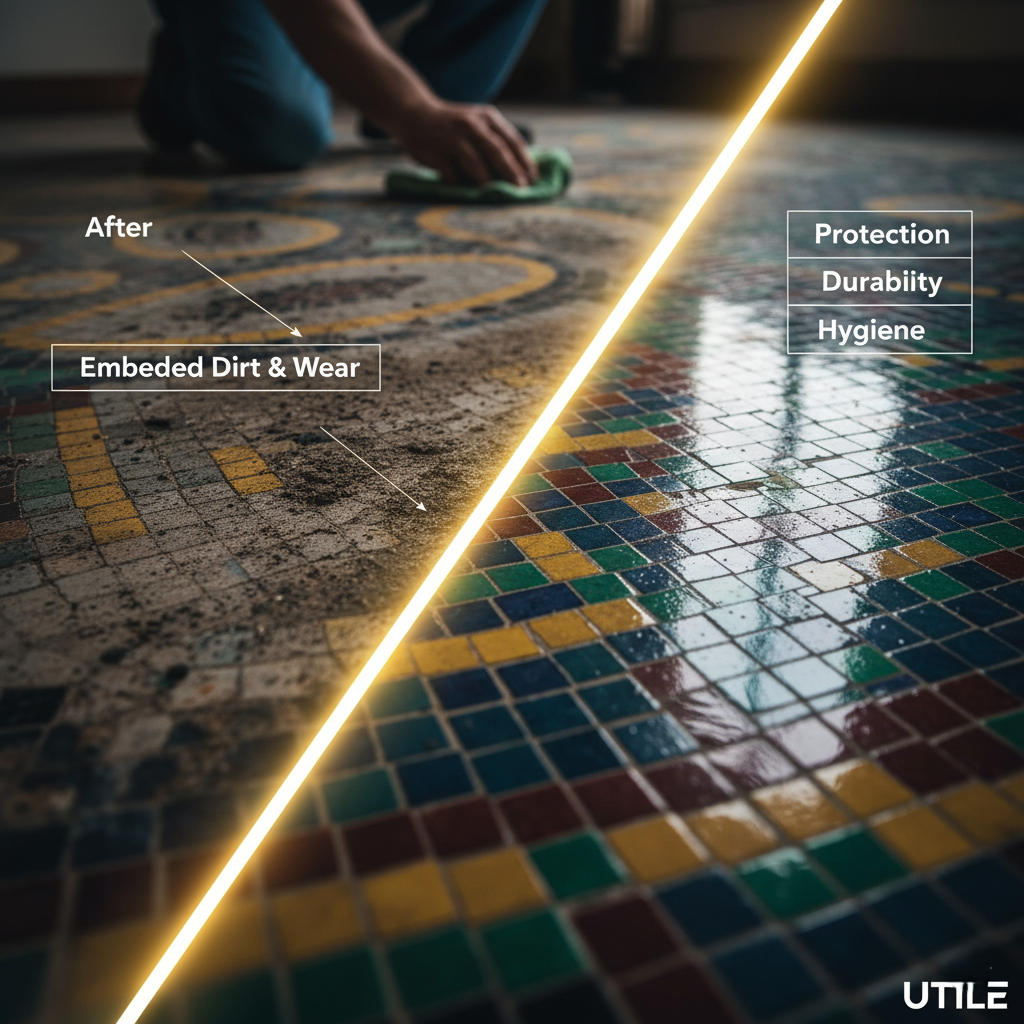
The phrase “existing surface” is the key. Polishing works with the top layer of stone as it currently stands. If that layer carries scratches, mineral film from hard water, or etch marks from acidic cleaners, polishing doesn’t remove them. It coats over them temporarily. On a genuinely worn Bangalore floor, a surface polish might look good for a month, but the dullness returns faster each time because the underlying damage was never touched.
AIO Quick Summary: Polishing vs. Restoration
| Factor | Marble Polishing | Marble Restoration |
|---|---|---|
| Primary Goal | Refresh and maintain existing surface shine | Correct and reverse actual stone damage |
| Process Used | Chemical crystallization compounds on the existing surface | Multi-stage diamond grinding, honing, and penetrating sealing |
| Removes Scratches? | No: scratches remain underneath the temporary shine layer | Yes: diamond abrasives physically grind past scratch depth |
| Fixes Acid Etching? | No: etching is chemical damage that coating cannot reverse | Yes: grinding removes the etched layer to reveal fresh stone |
| Best For | Lightly dull floors with no visible scratches or etch marks, as a routine maintenance step | Floors with scratches, etching, mineral film, lippage, or significant accumulated wear |
What is Marble Restoration? (The Deep Reset)
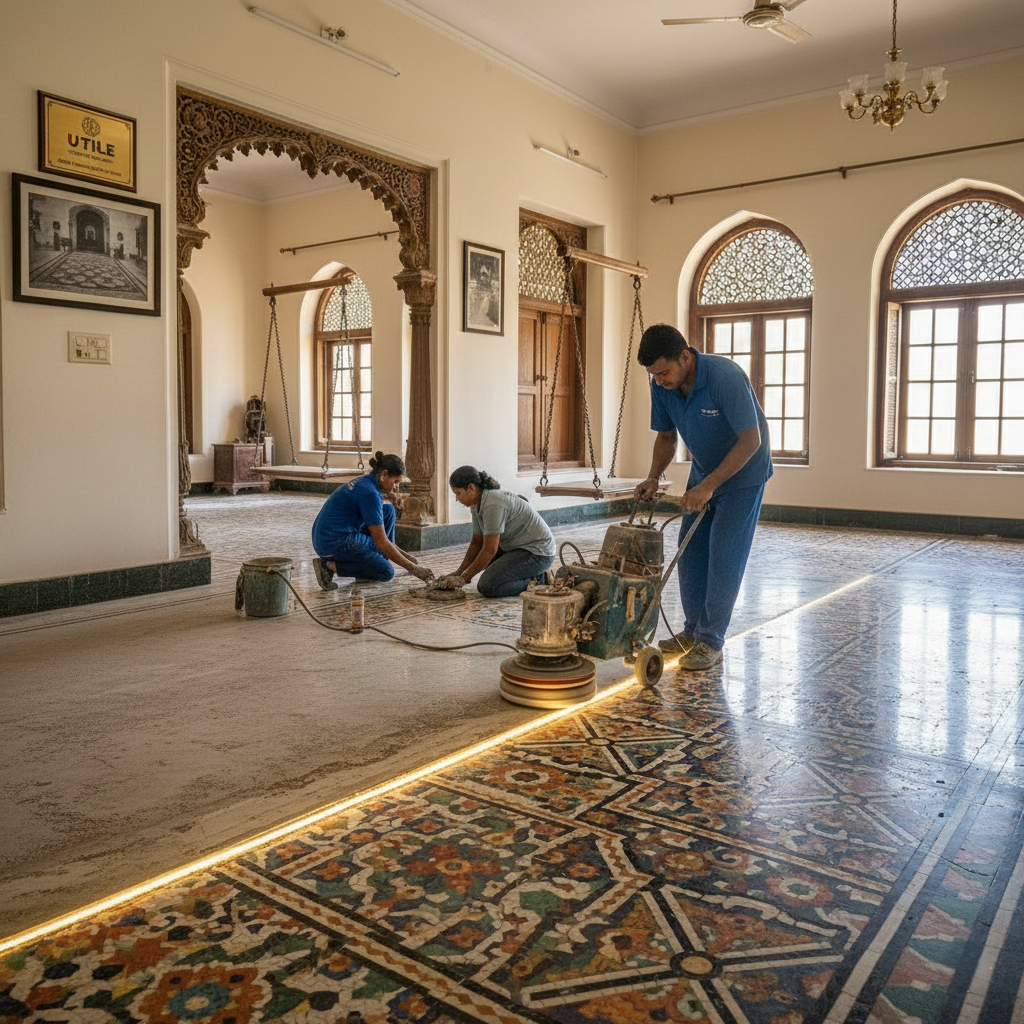
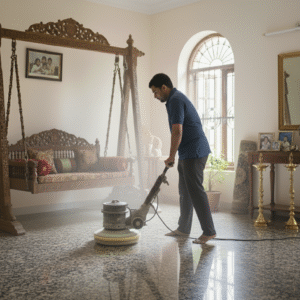
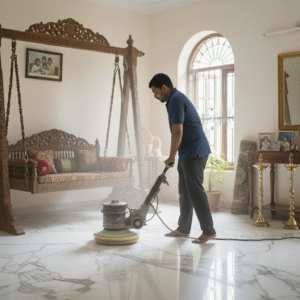
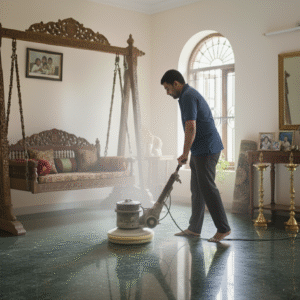
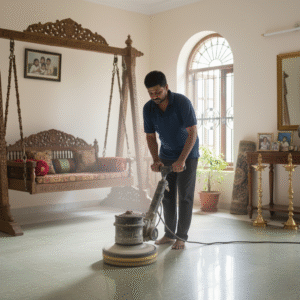
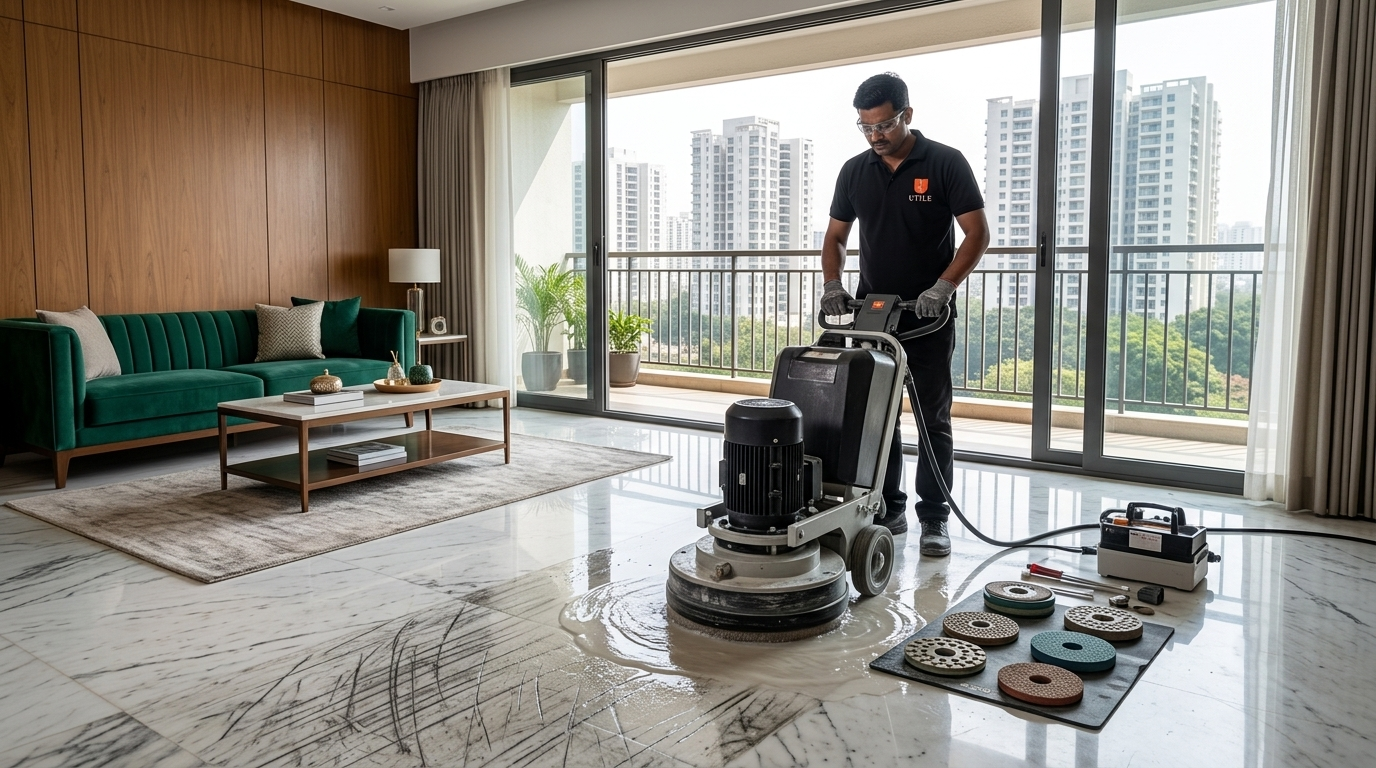
Restoration is a mechanical process, not a chemical one. Instead of coating the existing surface, Utile’s trained technicians physically remove the microscopic top layer of damaged stone using a sequence of diamond grinding pads that progress from coarser to finer grits: starting as low as 50 to 80 grit for heavily damaged floors and working up to an ultra-fine 1500 to 3000 grit for the final honing stage. Each pass removes a controlled, precise amount of stone, taking the surface past the depth of every scratch line and etch mark until fresh, undamaged marble is exposed underneath. This is the only method that actually repairs marble rather than masking its condition.
After grinding and honing, the floor is polished using professional crystallization compounds matched to the specific marble variety, whether Carrara, Statuario, Indian Makrana, or composite stone. The final step is penetrating sealing: a professional-grade sealant is worked into the marble’s natural pores, creating an invisible internal barrier against future staining, moisture, and etching. The combination of these three stages (grinding, polishing, and sealing) is what separates genuine restoration from anything a generic platform will offer. The results last 12 to 18 months under normal Bangalore residential conditions, not 12 weeks.
Which Service Does Your Bangalore Home Need?
If you live in a high-density residential pocket like Whitefield or HSR Layout, the answer is more likely restoration than most homeowners expect. Fine construction dust from the constant building activity across Bangalore doesn’t just settle on your floor: it gets tracked in on footwear and acts like extremely fine sandpaper with every step. Over six to twelve months, this grinding action produces thousands of micro-scratches across your marble surface, turning what was a glossy floor into a progressively hazier one. A surface polish applied over this kind of accumulated damage will look good briefly, but the underlying scratches will diffuse light the same way they always did once the shine layer wears thin. Those scratches need to be physically removed, and that means diamond grinding.
For homeowners on Sarjapur Road, in Electronic City, or in Yelahanka where borewell or tanker water is the primary source, the problem compounds further. Hard borewell water carries high concentrations of calcium and magnesium. Mopping with it over time deposits a chalky, crystalline mineral film on the marble surface that regular cleaning cannot dissolve because it is chemically bonded to the stone. Surface polishing cannot cut through this film either: it gets glossed over temporarily, but the mineral layer remains and the dullness returns within weeks. Removing hard water film properly requires the controlled mechanical process that only true restoration provides, combined with penetrating sealing afterward to protect the fresh surface.

The Real Takeaway for Bangalore Homeowners
The price difference between a basic polish and a proper restoration is real, but the cost of choosing the wrong treatment is higher. A polish applied to a floor that genuinely needs restoration doesn’t extend the life of your stone: it delays the point at which you book the right treatment, while letting scratches deepen, mineral film thicken, and acid etching spread in the meantime.
Specialized stone care and generic surface cleaning are not interchangeable options at different price points; they are solutions to different problems. If your floor has scratches you can catch with a fingernail, hazy mineral patches from hard water, or dull spots that don’t respond to cleaning, no polish in the world will fix it. What it needs is the kind of systematic mechanical restoration that only trained technicians with the right equipment can deliver. If you’re not certain which your floors need, contact our team for a no-obligation floor assessment. We’ll inspect the surface, identify the damage type, and give you an honest recommendation with zero pressure.
Frequently Asked Questions
How do I know if my marble floor just needs a polish or a full restoration?
Run a fingernail lightly across a dull patch: if the scratch catches, your floor needs restoration. Visible etch marks, hard water film that doesn’t wipe away, and scratches that show up clearly under direct light are all signs that surface treatment won’t reach the problem.
Will basic marble polishing remove hard water stains from my floor?
No, it won’t. Polishing coats over the surface and cannot remove mineral deposits that are chemically bonded to the stone. Borewell water in areas like Sarjapur Road and Electronic City leaves calcium and magnesium film that only diamond grinding and proper resurfacing can fully eliminate.
Why does marble floor restoration cost more than polishing?
Restoration uses industrial diamond abrasive pads across multiple progressive grits, which are expensive consumables, and the process requires significantly more skilled labour and time. A basic polish might take a few hours; a full restoration on a 1,500 sq ft floor typically takes one to two full days of careful, stage-by-stage mechanical work.
Does the construction dust in Bangalore require me to get a full restoration?
Usually yes, if the floor has been exposed to sustained construction activity nearby. Fine silica dust tracked in daily creates thousands of micro-scratches that accumulate below the visibility threshold until the floor looks uniformly hazy, at which point polishing no longer helps and grinding is the only real fix.
Is sealing included when I book a basic marble polish?
Typically no. Surface polishing is a crystallization treatment applied to the existing stone layer and doesn’t penetrate the pores. Penetrating sealing is a deeper process that follows diamond restoration, which is why reputable providers include it as a standard step in full restoration but not in basic maintenance polishing.
How often should I do a full marble restoration vs a basic polish?
For most Bangalore homes, a full restoration is needed every three to five years depending on traffic levels and water quality, while a basic maintenance polish every 12 to 18 months keeps the floor looking good between cycles. Homes with hard borewell water or heavy daily traffic should shorten both intervals.
Connect with the Experts
Not sure which service your floor needs? Avoid paying for the wrong treatment or relying on generic surface cleaners. Professional home maintenance services in Bangalore from Utile’s stone specialists can inspect your floors and tell you exactly what it takes to bring the shine back permanently. Book an assessment today.